
All
Location
All cities
Karpacz
Wonder Hill Sosnówka
Świeradów-Zdrój
Krzaczyna near Karpacz
Mysłakowice near Karpacz
Ścięgny near Karpacz
14
Jan
-
13
Jan
Date of stay
number of people
2
search

Travel blog
Standing atop Śnieżka, it's hard to miss them. The three distinctive, silvery shapes look as if someone had erected a section of a futuristic space station on the highest peak of the Karkonosze Mountains. It's no wonder, then, that the disks on Śnieżka have piqued the curiosity of tourists for years, often jokingly dubbed the "UFO building." Where did this unusual design come from? Was it truly inspired by spaceships? Learn the history of one of the most recognizable landmarks in the Karkonosze Mountains.
Śnieżka has long been a key tourist destination in the Karkonosze Mountains. The highest peak in the Sudetes attracts attention not only with the opportunity to climb 1,603 meters above sea level, but also with its unique atmosphere. Here, nature reveals its harsh face – strong winds, rapidly changing weather, and views stretching far beyond Poland's borders.
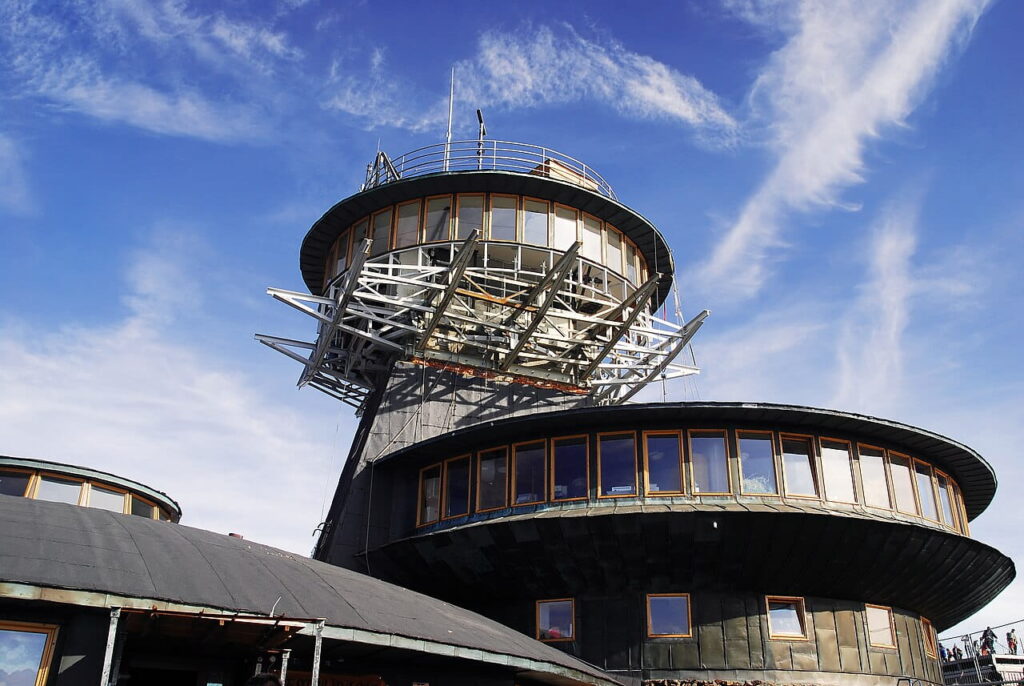
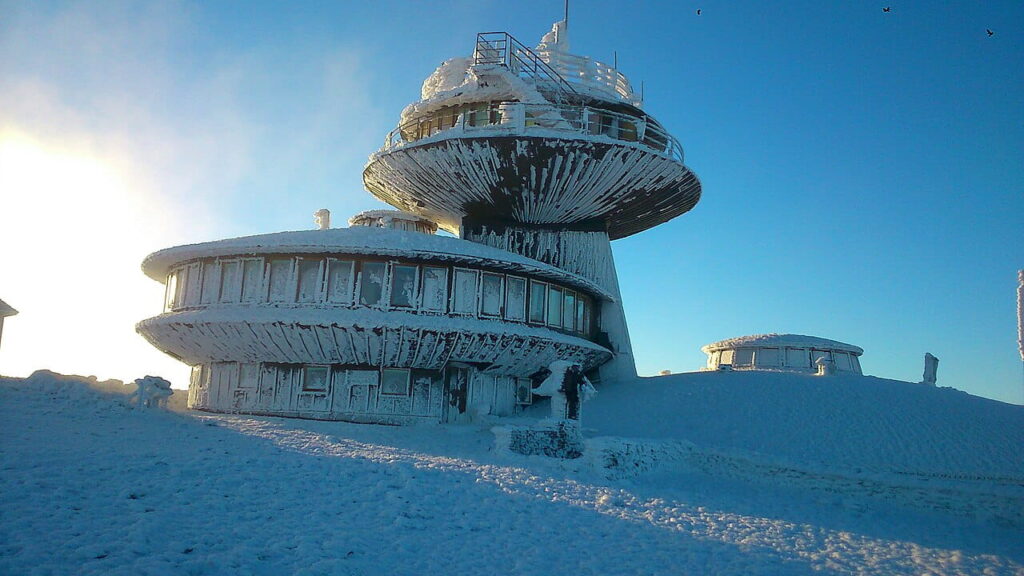
Against the backdrop of the rugged mountain landscape, another element stands out, hard to miss – the futuristic meteorological observatory, which has been one of the symbols of Śnieżka for years. The three interconnected discs resemble mysterious structures known from science fiction films. One thing is certain – the discs on Śnieżka are something that definitely stands out against the mountain landscape.
Climbing Śnieżka is often just one of many highlights of a mountain trip. Therefore, it's worth choosing accommodation that will allow you to conveniently plan your next few days – both on the trail and while exploring Karpacz and the surrounding area.
Wonder Home Apartments is a proposition for anyone who values independence, space, and comfort during their vacation. Thanks to convenient locations you can easily plan both a trip to Śnieżka and a visit to the most popular attractions of Karpacz.
After a day spent on the trail, when your legs remind you that the mountains offer not only beautiful views but also a substantial dose of exercise, it's good to return to a place where you can truly regenerate.
We offer comfortable apartments perfect for a short weekend, a family vacation, a romantic getaway for two, or a longer stay combined with remote work.
During peak season, finding a parking space in Karpacz can be challenging, especially near popular attractions and trails. Therefore, a major convenience for Wonder Home guests is the free parking spaces, allowing them to start their stay without the added expense and stress of searching for a parking space.
The apartments offer, among others:
The mountains can be exhausting in the best possible way. That's why, upon returning, you appreciate the space, silence, and comfort so much.
An apartment with a garden, sauna, or a view of the Karkonosze Mountains? Get inspired and choose the perfect place for your needs:
The distinctive discs on Śnieżka have become such a part of the mountain landscape that it's hard to imagine the highest point in the Karkonosze Mountains without them. However, their history goes back much further than the futuristic structure itself – before the famous observatory building was built, weather observations were conducted here for decades.
As early as the 19th century, Śnieżka was recognized as an excellent location for monitoring atmospheric conditions. However, this was no easy task – strong winds, fog, and rapidly changing conditions meant that meteorologists' work required a properly prepared facility.
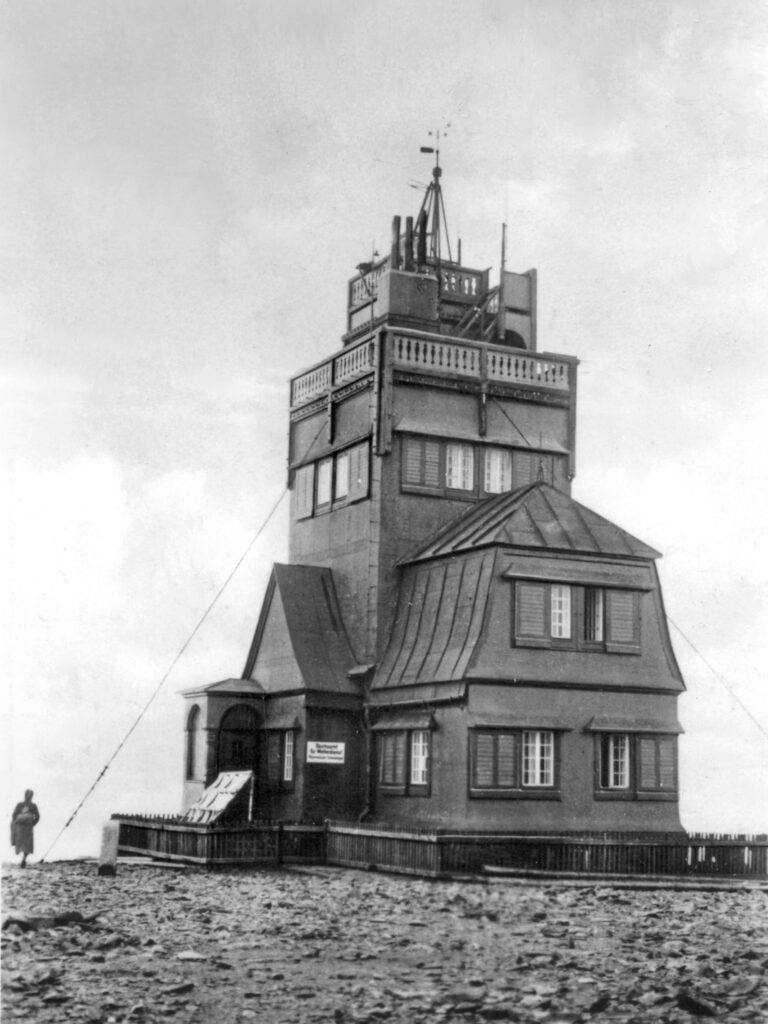
For years, measurements were conducted in an older wooden observatory, which eventually no longer met the scientists' needs. The idea then arose to create a modern structure that would withstand the conditions of the Karkonosze Mountains.
The project was entrusted to architects from the Wrocław University of Science and Technology, Witold Lipiński and Waldemar Wawrzyniak. Their bold vision resulted in a building resembling a spaceship rather than a traditional mountain structure. Construction began in 1966, and since 1975, regular meteorological measurements have been conducted at the observatory.
This is a question almost every tourist asks themselves upon first seeing the distinctive shapes at the top. The answer is simpler than it might seem – the building's shape stems primarily from the architects' vision and the intended function.
In the 1950s and 1960s, fascination with space flight and modern technology was immense. Futuristic forms appeared in architecture around the world, and designers increasingly moved away from classical forms. Architect Witold Lipiński was inspired by precisely this modern aesthetic. Instead of concealing the building within the landscape, he created a structure that was intended to be expressive and memorable.
The result? A structure composed of three distinctive discs emerged, which remains remarkably original to this day. However, this is no mere decorative element. Every element of the building was designed with the harsh conditions of Śnieżka in mind.
Although the observatory's exterior resembles a futuristic spaceship, its interior is primarily dedicated to science. The building consists of three interconnected sections:
The lowest and largest structure housed spaces intended for visitors. This included accommodations for tourists, a restaurant, and a rest area.
This part of the building was intended for observatory employees and the facilities needed to conduct measurements.
The highest part of the building is the workspace of meteorologists. From here, observations and measurements of temperature, precipitation, and wind speed are conducted. The Śnieżka Observatory is one of the most important high-altitude meteorological stations in Poland and is part of the international weather observation system.
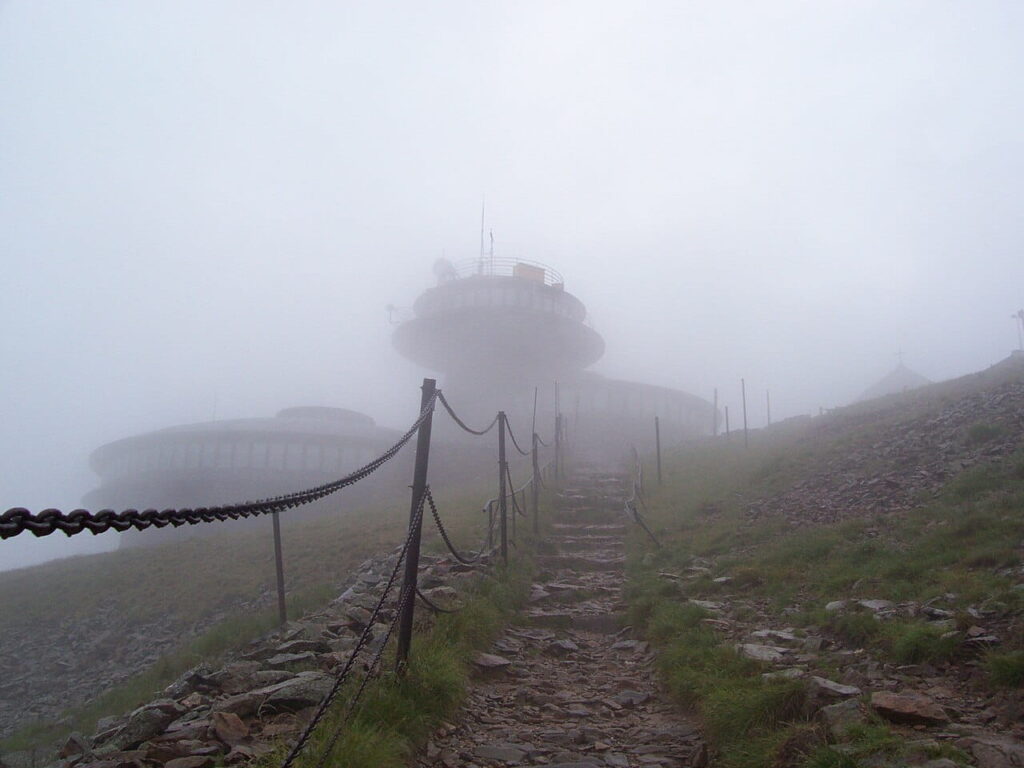
Constructing such an unusual building on Śnieżka was no easy task. The highest peak in the Karkonosze Mountains can reveal its harsh side – strong winds, low temperatures, and rapidly changing weather are commonplace here. Therefore, the observatory had to be not only unique but above all resistant to exceptionally demanding conditions.
For years, this place has been a reminder that mountains have their own rules. Śnieżka is shrouded in fog for much of the year, and in winter, its rugged landscape evokes the far north, not one of Poland's most popular peaks. Perhaps this is why the distinctive discs have become so deeply etched in the Śnieżka landscape. Although they were created by humans, today they are one of the most recognizable symbols of this place.
Download our free guides to Karpacz and Świeradów-Zdrój!
There are several popular routes to climb Śnieżka from Karpacz. Each has a different character – some are shorter and easier, others more demanding, but all lead to the same destination. The most popular options are:
This is one of the most beautiful trails through the Karkonosze Mountains. Along the way, you can see, among others, the Wang Church, Samotnia, and Strzecha Akademicka.
Completion time: about 3.5–4 hours.
For those who want to shorten the approach, a good solution is to take the cable car up to Kopa, then hike the section to the Silesian House and then to the summit.
Walking time from the Silesian House: about 40–60 minutes.
This is a more demanding route for those in good physical condition. The rewards are exceptional views and a more rugged trail. Before setting out, it's worth checking the current weather conditions – even in summer, Śnieżka can be chilly and windy.
Completion time: about 3–3.5 hours
Be sure to check out our previous posts about Karpacz:
Are the discs on Śnieżka worth seeing? Summary
Is Śnieżka worth visiting? Absolutely. It's a place where mountain adventure, extraordinary views, and history hidden within one of the Karkonosze Mountains' most iconic structures meet. Even those not normally interested in architecture will find their gaze drawn to the three silver discs that stand out against the stark mountain landscape. That's why Śnieżka is one of those places you want to return to—both for the views and the stories engraved within its landscape.
Author: Eliza Tomaka
Sources: Twisted Realm from Gdansk, Poland, CC BY 2.0 https://creativecommons.org/licenses/by/2.0, via Wikimedia Commons